

Tuesday, April 16, 2019
Holy Tuesday
Then Jesus said to the crowds and to his disciples, “The scribes and the Pharisees sit on Moses' seat, so do and observe whatever they tell you, but not the works they do. For they preach, but do not practice. They tie up heavy burdens, hard to bear, and lay them on people's shoulders, but they themselves are not willing to move them with their finger. They do all their deeds to be seen by others. For they make their phylacteries broad and their fringes long, and they love the place of honor at feasts and the best seats in the synagogues and greetings in the marketplaces and being called rabbi by others. But you are not to be called rabbi, for you have one teacher, and you are all brothers. And call no man your father on earth, for you have one Father, who is in heaven. Neither be called instructors, for you have one instructor, the Christ. The greatest among you shall be your servant. Whoever exalts himself will be humbled, and whoever humbles himself will be exalted. (Matthew 23:1-12 ESV).
 “Love does not always come in hugs and flowery words, but as words that cut like a sword through the aspects of ourselves that enslave us and bring us down.” (Todd Lattig). The significance of Holy Tuesday is not easily grasped. In a single day, Jesus would simultaneously condemn the religious authorities while confirming His deity. The cleansing of the Temple on the day before caused the Pharisees to question Jesus’ right to do “these things.” Jesus had not received His authority from the religious leaders, so they wanted answers.
Attempts were made to force Jesus to state that He had divine power from God. Then He could be charged with blasphemy, even arrested. Knowing their motives, Jesus agreed to answer their questions if they first answered whether John the Baptist’s work was human or divine. If divine, John’s preaching affirmed Jesus as divine. If human, those who followed John would riot. It was the Sanhedrin’s responsibility to know the difference between true and false prophets, yet they shamefully admitted they didn’t know. Thus, Jesus did not answer their question (cf. Matthew 21:23-27).
So, the conspiracies to trap Jesus escalated. Israel’s religious leaders had one goal: to get rid of Jesus of Nazareth. If this meant cooperating with a lifelong enemy, any means would be justified. The Pharisees, who opposed Rome and its intrusion on the Jewish way of life, and the Herodians, supporters of Herod the Great, joined forces. Even the Sadducees, religious liberals who denied a resurrection, angels, or spirits, attempted to discredit Jesus. Jesus’ answers were direct and clear. Our reading today is a scathing condemnation of the ways of religion for religion’s sake. This is certainly a contemporary word for our culture. Our focus must be on the role of a true servant to God and to others. Make that your prayer today.
“Love does not always come in hugs and flowery words, but as words that cut like a sword through the aspects of ourselves that enslave us and bring us down.” (Todd Lattig). The significance of Holy Tuesday is not easily grasped. In a single day, Jesus would simultaneously condemn the religious authorities while confirming His deity. The cleansing of the Temple on the day before caused the Pharisees to question Jesus’ right to do “these things.” Jesus had not received His authority from the religious leaders, so they wanted answers.
Attempts were made to force Jesus to state that He had divine power from God. Then He could be charged with blasphemy, even arrested. Knowing their motives, Jesus agreed to answer their questions if they first answered whether John the Baptist’s work was human or divine. If divine, John’s preaching affirmed Jesus as divine. If human, those who followed John would riot. It was the Sanhedrin’s responsibility to know the difference between true and false prophets, yet they shamefully admitted they didn’t know. Thus, Jesus did not answer their question (cf. Matthew 21:23-27).
So, the conspiracies to trap Jesus escalated. Israel’s religious leaders had one goal: to get rid of Jesus of Nazareth. If this meant cooperating with a lifelong enemy, any means would be justified. The Pharisees, who opposed Rome and its intrusion on the Jewish way of life, and the Herodians, supporters of Herod the Great, joined forces. Even the Sadducees, religious liberals who denied a resurrection, angels, or spirits, attempted to discredit Jesus. Jesus’ answers were direct and clear. Our reading today is a scathing condemnation of the ways of religion for religion’s sake. This is certainly a contemporary word for our culture. Our focus must be on the role of a true servant to God and to others. Make that your prayer today.

Monday, April 15, 2019
Lent - Pt 45
The next day, that is, after the day of Preparation, the chief priests and the Pharisees gathered before Pilate and said, “Sir, we remember how that impostor said, while he was still alive, ‘After three days I will rise.’ Therefore order the tomb to be made secure until the third day, lest his disciples go and steal him away and tell the people, ‘He has risen from the dead,’ and the last fraud will be worse than the first.” Pilate said to them, “You have a guard of soldiers. Go, make it as secure as you can.” So they went and made the tomb secure by sealing the stone and setting a guard. (Matthew 27:62-66 ESV).
 If we had any doubt that Pilate had Jesus executed to prevent a riot, rather than because Christ was guilty of attempting to overthrow Rome (cf. Matthew 27:11-26), the circumstances of his burial prove that the governor believed Jesus was innocent as charged. Most crucified victims in ancient Rome were left on the cross even after they were dead. It was not unusual, however, for Roman authorities to grant the body of a crucified person to his friends or family, provided he was not guilty of high treason. Pilate evidently did not think Jesus was guilty at all, otherwise he would not have given Christ’s body to Joseph of Arimathea. However, the Jewish religious authorities saw a need for further precautions.
Like many other first-century Jews, Jesus was buried outside the city in a cave hewn in a limestone hill. The “great stone” (v. 60) that sealed His grave was set on an incline in a channel cut in the rock, making it easier to cover the tomb by rolling the stone downhill. It took several men to roll the stone back up the incline, which discouraged grave robbers and wild animals from trying to enter the tomb. This refutes any theory that Jesus swooned, and, not having died, regained consciousness and rolled the stone away Himself. Other details that corroborate the historicity of the resurrection are the seal and contingent of soldiers placed at the entrance to the tomb (vv. 62–66). The seal was a soft, moldable substance, probably clay, that was imprinted with the Roman imperial seal and attached to the stone with a rope. Breaking the seal would incur the Empire’s wrath, even if someone could get past the guards.
Their fear of Jesus’ resurrection is only a further assurance to us today. I wish we could have been there to see the expression and reaction of the guards. The Scripture will tell us there was an earthquake, the stone was rolled back, and like lightening an angel appears. The guards fell in fear, “as if dead” (cf. Matthew 28:4). The message to the women is the same to us: “Don’t be afraid.” We face many fears today. None of them are a match for our Savior and His grace in us. Let that really penetrate your life today! All your sins are forgiven and you are redeemed! Nothing can change that truth!
If we had any doubt that Pilate had Jesus executed to prevent a riot, rather than because Christ was guilty of attempting to overthrow Rome (cf. Matthew 27:11-26), the circumstances of his burial prove that the governor believed Jesus was innocent as charged. Most crucified victims in ancient Rome were left on the cross even after they were dead. It was not unusual, however, for Roman authorities to grant the body of a crucified person to his friends or family, provided he was not guilty of high treason. Pilate evidently did not think Jesus was guilty at all, otherwise he would not have given Christ’s body to Joseph of Arimathea. However, the Jewish religious authorities saw a need for further precautions.
Like many other first-century Jews, Jesus was buried outside the city in a cave hewn in a limestone hill. The “great stone” (v. 60) that sealed His grave was set on an incline in a channel cut in the rock, making it easier to cover the tomb by rolling the stone downhill. It took several men to roll the stone back up the incline, which discouraged grave robbers and wild animals from trying to enter the tomb. This refutes any theory that Jesus swooned, and, not having died, regained consciousness and rolled the stone away Himself. Other details that corroborate the historicity of the resurrection are the seal and contingent of soldiers placed at the entrance to the tomb (vv. 62–66). The seal was a soft, moldable substance, probably clay, that was imprinted with the Roman imperial seal and attached to the stone with a rope. Breaking the seal would incur the Empire’s wrath, even if someone could get past the guards.
Their fear of Jesus’ resurrection is only a further assurance to us today. I wish we could have been there to see the expression and reaction of the guards. The Scripture will tell us there was an earthquake, the stone was rolled back, and like lightening an angel appears. The guards fell in fear, “as if dead” (cf. Matthew 28:4). The message to the women is the same to us: “Don’t be afraid.” We face many fears today. None of them are a match for our Savior and His grace in us. Let that really penetrate your life today! All your sins are forgiven and you are redeemed! Nothing can change that truth!

Sunday, April 14, 2019
Lent - Pt 44
It was the day of Preparation, and the Sabbath was beginning. The women who had come with him from Galilee followed and saw the tomb and how his body was laid. Then they returned and prepared spices and ointments. On the Sabbath they rested according to the commandment. (Luke 23:54-56 ESV).
 Now we come to the final characters in the story of Jesus’ death. These are the women of our reading who hastily prepared Jesus’ body for burial. In Judea, if there was an approaching feast day, the bodies of crucified men were taken down and given to relatives. A body was not allowed to hang on a cross after dark. Philo, the Jewish philosopher, writes:
Men who had been crucified when this festival and holiday was at hand, were taken down and given up to their relations, in order to receive the honors of sepulchre, and to enjoy such observances as are due to the dead; for … the sacred character of the festival ought to be observed. (Philo, Flaccus, 10.83).
John’s gospel says that Jesus was buried according to the Jewish tradition. This means that the body was washed before it was wrapped in a simple shroud made of fine linen, normally a task performed by the women relatives of the deceased. There were prescribed psalms and prayers said at this time. The body was then placed on a stone shelf within the tomb. Jesus’ burial was quickly done. Everything had to be finished in the sort period remaining before sundown as all the people involved were strict Jews, carefully observant of the Sabbath.
There is stress on the fact that Jesus was buried in a ‘new’ tomb. If Jesus’ body was the only body in a new tomb, this would rule out the possibility of several dead bodies being confused. Keep in mind that the gospel writers were telling their story after the Resurrection, when there were plenty of doubters to question the veracity of Jesus’ death and Resurrection. Matthew’s gospel (27:62-66) mentions an additional measure to prevent the theft of Jesus’ body: the posting of a guard at the tomb and the sealing of the tomb. Admittedly this was done on the Saturday morning, but the guard would certainly have checked the tomb first to see if Jesus’ body was there.
All of these factors provided the abundant measure of testimony that Jesus was indeed dead, buried, and resurrected. God left nothing to the imagination of man concerning this great miracle. That should give us even more assurance that our eventual victory is also assured. Jesus is but the first resurrection. As believers we shall follow in his footsteps there also. Eternal life is ours because he has gone before us and conquered even death! Rejoice!
Now we come to the final characters in the story of Jesus’ death. These are the women of our reading who hastily prepared Jesus’ body for burial. In Judea, if there was an approaching feast day, the bodies of crucified men were taken down and given to relatives. A body was not allowed to hang on a cross after dark. Philo, the Jewish philosopher, writes:
Men who had been crucified when this festival and holiday was at hand, were taken down and given up to their relations, in order to receive the honors of sepulchre, and to enjoy such observances as are due to the dead; for … the sacred character of the festival ought to be observed. (Philo, Flaccus, 10.83).
John’s gospel says that Jesus was buried according to the Jewish tradition. This means that the body was washed before it was wrapped in a simple shroud made of fine linen, normally a task performed by the women relatives of the deceased. There were prescribed psalms and prayers said at this time. The body was then placed on a stone shelf within the tomb. Jesus’ burial was quickly done. Everything had to be finished in the sort period remaining before sundown as all the people involved were strict Jews, carefully observant of the Sabbath.
There is stress on the fact that Jesus was buried in a ‘new’ tomb. If Jesus’ body was the only body in a new tomb, this would rule out the possibility of several dead bodies being confused. Keep in mind that the gospel writers were telling their story after the Resurrection, when there were plenty of doubters to question the veracity of Jesus’ death and Resurrection. Matthew’s gospel (27:62-66) mentions an additional measure to prevent the theft of Jesus’ body: the posting of a guard at the tomb and the sealing of the tomb. Admittedly this was done on the Saturday morning, but the guard would certainly have checked the tomb first to see if Jesus’ body was there.
All of these factors provided the abundant measure of testimony that Jesus was indeed dead, buried, and resurrected. God left nothing to the imagination of man concerning this great miracle. That should give us even more assurance that our eventual victory is also assured. Jesus is but the first resurrection. As believers we shall follow in his footsteps there also. Eternal life is ours because he has gone before us and conquered even death! Rejoice!

Lent - Pt 43
Now there was a man named Joseph, from the Jewish town of Arimathea. He was a member of the council, a good and righteous man, who had not consented to their decision and action; and he was looking for the kingdom of God. This man went to Pilate and asked for the body of Jesus. Then he took it down and wrapped it in a linen shroud and laid him in a tomb cut in stone, where no one had ever yet been laid. (Luke 23:50-53 ESV).
 We learn from Matthew and Mark that Joseph was bold enough to ask Pontius Pilate for the body of Jesus. Pilate, the Roman governor who ruled over the land of the Jews, was the one who had ordered the crucifixion of Jesus. After making sure that Jesus was dead, Pilate allowed Joseph to take his body. Joseph took the body of Jesus, wrapped him in linens and placed him in a rock tomb. Matthew tells us that the tomb had never been used before. Matthew and Mark inform us that the tomb had been carved out of rock. After placing the body of Jesus in the tomb, Joseph of Arimathea rolled a large stone to close the entrance to the tomb. It was from this tomb that Jesus was resurrected. In our reading today from the book of Luke, we are told that Joseph of Arimathea was a good man who believed in the teachings of Jesus, and that he was a member of the Sanhedrin who had not consented to the action that the council had taken against Jesus.
It is significant that Jesus was buried in "another’s" tomb, which is expressive of his humility. In his lifetime, Jesus had nowhere to lay down his head to sleep, and at his death had no tomb of his own to lay his dead body in. Thus, it denotes that what he did and suffered, and what was done to him, were not for himself but for others. He died not for his own sins, but for the sins of others, and he was buried, not so much for his own sake, but for others, that they and their sins might be buried with him.
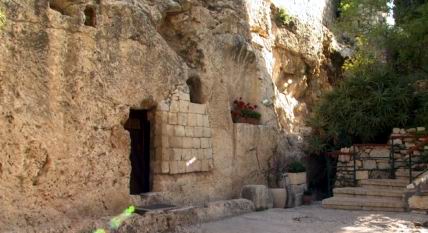
It was also a "new" tomb. That should point us to the truth that he is the one who makes all things new. He made the grave for his people quite a new and another thing to what it was. When he dwells in the hearts of men, old things pass away, and all become new. In addition, this tomb was "hewn out of the rock," as was sometimes the manner of rich men to do, to prepare such sepulchres while living for the greater security of their bodies when dead (cf. Isaiah 22:16), and this prevented any such objection to be made to the resurrection of Christ that the apostles, through some subterraneous passages, got to the body of Christ and took it away. To all this may be added that at the door of this new tomb hewn out of a rock a great stone was rolled, and this stone sealed by the Jews themselves; so that no pretence could be made for a fraud. Joseph’s last service for Jesus points us directly to the miracle of redemption and eternal life!
We learn from Matthew and Mark that Joseph was bold enough to ask Pontius Pilate for the body of Jesus. Pilate, the Roman governor who ruled over the land of the Jews, was the one who had ordered the crucifixion of Jesus. After making sure that Jesus was dead, Pilate allowed Joseph to take his body. Joseph took the body of Jesus, wrapped him in linens and placed him in a rock tomb. Matthew tells us that the tomb had never been used before. Matthew and Mark inform us that the tomb had been carved out of rock. After placing the body of Jesus in the tomb, Joseph of Arimathea rolled a large stone to close the entrance to the tomb. It was from this tomb that Jesus was resurrected. In our reading today from the book of Luke, we are told that Joseph of Arimathea was a good man who believed in the teachings of Jesus, and that he was a member of the Sanhedrin who had not consented to the action that the council had taken against Jesus.
It is significant that Jesus was buried in "another’s" tomb, which is expressive of his humility. In his lifetime, Jesus had nowhere to lay down his head to sleep, and at his death had no tomb of his own to lay his dead body in. Thus, it denotes that what he did and suffered, and what was done to him, were not for himself but for others. He died not for his own sins, but for the sins of others, and he was buried, not so much for his own sake, but for others, that they and their sins might be buried with him.
It was also a "new" tomb. That should point us to the truth that he is the one who makes all things new. He made the grave for his people quite a new and another thing to what it was. When he dwells in the hearts of men, old things pass away, and all become new. In addition, this tomb was "hewn out of the rock," as was sometimes the manner of rich men to do, to prepare such sepulchres while living for the greater security of their bodies when dead (cf. Isaiah 22:16), and this prevented any such objection to be made to the resurrection of Christ that the apostles, through some subterraneous passages, got to the body of Christ and took it away. To all this may be added that at the door of this new tomb hewn out of a rock a great stone was rolled, and this stone sealed by the Jews themselves; so that no pretence could be made for a fraud. Joseph’s last service for Jesus points us directly to the miracle of redemption and eternal life!
Friday, April 12, 2019
Lent - Pt 42
It was now about the sixth hour, and there was darkness over the whole land until the ninth hour, while the sun's light failed. And the curtain of the temple was torn in two. Then Jesus, calling out with a loud voice, said, “Father, into your hands I commit my spirit!” And having said this he breathed his last. Now when the centurion saw what had taken place, he praised God, saying, “Certainly this man was innocent!” And all the crowds that had assembled for this spectacle, when they saw what had taken place, returned home beating their breasts. And all his acquaintances and the women who had followed him from Galilee stood at a distance watching these things. (Luke 23:44-49 ESV).
 Every believer carries a measure of the guilt for Jesus’ death. If it were not for our sin, we would have no need of a Savior. While hymns convey this idea of physically being present and participating in his death, we know this is figurative. However, while we were not present at the time of His death, we bear the guilt of providing the need for His death. This is not the case of the Roman centurion. We know little about the man except that he was probably a hardened solider and commanded a detachment of what were most likely Syrian-born soldiers. He had, in all likelihood, presided over the crucifixion of hundreds or even thousands of men and must have become hardened to the agony these men endured.
It is likely that this man was present from the time Jesus was brought before Pilate right until the Lord’s body was lowered from the cross and given to Joseph of Arimathea. He may even have been present with the detachment of soldiers that aided in Jesus’ arrest the night before His crucifixion. This man would have accompanied Jesus from the time the Jewish leaders brought him to the Praetorium. He would have ordered his men to beat Him, caring little for who He was, knowing Him only to be another in a long line of people he was commanded to execute. He would have been nearby when his men dressed Jesus in a robe, pressed a crown of thorns onto His head and walked Him to Golgotha. He would have given the order to proceed with the crucifixion.
However, he is not mentioned for his cruelty, ruthlessness or ability as a soldier. He is mentioned for something far more important, for a marvelous transformation that occurred immediately after the death of one of his prisoners. Having seen so many crucifixions, the centurion knew what to expect from prisoners. He saw something vastly different in Jesus. We can only guess when the centurion began to realize that perhaps, just perhaps, Jesus was exactly who He claimed to be. What we do know is exactly when He knew with full certainty. Matthew tells us “when the centurion and those with him, who were guarding Jesus, saw the earthquake and the things that had happened, they feared greatly, saying, “Truly this was the Son of God!” Luke expands on this saying “when the centurion saw what had happened, he glorified God, saying, “Certainly this was a righteous Man!” And just like that, the man who presided over Jesus’ execution, the man who ordered the nails to be driven into His hands and feet, became the first person to become a believer after Jesus’ death. How about you?
Every believer carries a measure of the guilt for Jesus’ death. If it were not for our sin, we would have no need of a Savior. While hymns convey this idea of physically being present and participating in his death, we know this is figurative. However, while we were not present at the time of His death, we bear the guilt of providing the need for His death. This is not the case of the Roman centurion. We know little about the man except that he was probably a hardened solider and commanded a detachment of what were most likely Syrian-born soldiers. He had, in all likelihood, presided over the crucifixion of hundreds or even thousands of men and must have become hardened to the agony these men endured.
It is likely that this man was present from the time Jesus was brought before Pilate right until the Lord’s body was lowered from the cross and given to Joseph of Arimathea. He may even have been present with the detachment of soldiers that aided in Jesus’ arrest the night before His crucifixion. This man would have accompanied Jesus from the time the Jewish leaders brought him to the Praetorium. He would have ordered his men to beat Him, caring little for who He was, knowing Him only to be another in a long line of people he was commanded to execute. He would have been nearby when his men dressed Jesus in a robe, pressed a crown of thorns onto His head and walked Him to Golgotha. He would have given the order to proceed with the crucifixion.
However, he is not mentioned for his cruelty, ruthlessness or ability as a soldier. He is mentioned for something far more important, for a marvelous transformation that occurred immediately after the death of one of his prisoners. Having seen so many crucifixions, the centurion knew what to expect from prisoners. He saw something vastly different in Jesus. We can only guess when the centurion began to realize that perhaps, just perhaps, Jesus was exactly who He claimed to be. What we do know is exactly when He knew with full certainty. Matthew tells us “when the centurion and those with him, who were guarding Jesus, saw the earthquake and the things that had happened, they feared greatly, saying, “Truly this was the Son of God!” Luke expands on this saying “when the centurion saw what had happened, he glorified God, saying, “Certainly this was a righteous Man!” And just like that, the man who presided over Jesus’ execution, the man who ordered the nails to be driven into His hands and feet, became the first person to become a believer after Jesus’ death. How about you?

Thursday, April 11, 2019
Lent - Pt 41
One of the criminals who were hanged railed at him, saying, “Are you not the Christ? Save yourself and us!” But the other rebuked him, saying, “Do you not fear God, since you are under the same sentence of condemnation? And we indeed justly, for we are receiving the due reward of our deeds; but this man has done nothing wrong.” And he said, “Jesus, remember me when you come into your kingdom.” And he said to him, “Truly, I say to you, today you will be with me in paradise.” (Luke 23:39-43 ESV).
 The life of Jesus was a mission of redemption. His death was no exception. The crucifixion of Jesus is a lesson in living. Jesus loved to teach by example. His death is another one of those incredible lessons. Our reading tells us that one of the other condemned men was ridiculing him (vv. 39-41). But the other criminal rebuked him. Jesus was suffering in a way that we cannot begin to grasp or even partially understand, so too was this criminal. He was never to come down from that cross alive, and yet he saw, or sensed something in Jesus that moved him in such a way that it became the road to his salvation.
If ever there was a soul hovering on the brink of Hell it was this criminal, a virtual nobody hanging beside Jesus, the Son of God. In a heartbeat, he voiced what his intuition had detected; that Jesus was indeed the messiah! What Jesus did next was a wonderful example of understanding, acceptance, love, and compassion all wrapped up in one conclusive act. It is the epitome of the life of Jesus, strength thru adversity. Without hesitation Jesus responded to his plea for mercy: "Jesus answered him, 'I tell you the truth, today you will be with me in paradise'" (Luke:23:43). We can learn from one of the two who were crucified next to Jesus. It is never too late to repent and ask the Lord to accept us. Jesus cleansed this man from his sins, received him graciously, and justified him unconditionally. He extended the gift of eternal life to him.
We should learn from this incredible scene. Jesus’ love and mercy can subdue our doubts and ease our pain. As we come to Him without excuse and offer our heart and soul to Him, we can experience the awesome love and grace of the Lord. Jesus never strayed from His objective which was to teach us unconditional love and acceptance towards each other. His death was a testimony that salvation is a reality for all of us when we voice our faith. Jesus gave us a lesson in forgiveness while He hung there upon the cross suffering for us, dying for us.
Perhaps today is your day to simply whisper a prayer of repentance and experience the flood of God’s grace into your heart and soul. It is never too late in this life!
The life of Jesus was a mission of redemption. His death was no exception. The crucifixion of Jesus is a lesson in living. Jesus loved to teach by example. His death is another one of those incredible lessons. Our reading tells us that one of the other condemned men was ridiculing him (vv. 39-41). But the other criminal rebuked him. Jesus was suffering in a way that we cannot begin to grasp or even partially understand, so too was this criminal. He was never to come down from that cross alive, and yet he saw, or sensed something in Jesus that moved him in such a way that it became the road to his salvation.
If ever there was a soul hovering on the brink of Hell it was this criminal, a virtual nobody hanging beside Jesus, the Son of God. In a heartbeat, he voiced what his intuition had detected; that Jesus was indeed the messiah! What Jesus did next was a wonderful example of understanding, acceptance, love, and compassion all wrapped up in one conclusive act. It is the epitome of the life of Jesus, strength thru adversity. Without hesitation Jesus responded to his plea for mercy: "Jesus answered him, 'I tell you the truth, today you will be with me in paradise'" (Luke:23:43). We can learn from one of the two who were crucified next to Jesus. It is never too late to repent and ask the Lord to accept us. Jesus cleansed this man from his sins, received him graciously, and justified him unconditionally. He extended the gift of eternal life to him.
We should learn from this incredible scene. Jesus’ love and mercy can subdue our doubts and ease our pain. As we come to Him without excuse and offer our heart and soul to Him, we can experience the awesome love and grace of the Lord. Jesus never strayed from His objective which was to teach us unconditional love and acceptance towards each other. His death was a testimony that salvation is a reality for all of us when we voice our faith. Jesus gave us a lesson in forgiveness while He hung there upon the cross suffering for us, dying for us.
Perhaps today is your day to simply whisper a prayer of repentance and experience the flood of God’s grace into your heart and soul. It is never too late in this life!

Wednesday, April 10, 2019
Lent - Pt 40
And there followed him a great multitude of the people and of women who were mourning and lamenting for him. But turning to them Jesus said, “Daughters of Jerusalem, do not weep for me, but weep for yourselves and for your children. For behold, the days are coming when they will say, ‘Blessed are the barren and the wombs that never bore and the breasts that never nursed!’ Then they will begin to say to the mountains, ‘Fall on us,’ and to the hills, ‘Cover us.’ For if they do these things when the wood is green, what will happen when it is dry?” (Luke 23:27-31 ESV).
 If you are able to take the same route through Old Jerusalem, twisting through the limestone passageways, you may hear the tapping cadence of the Greek Orthodox bishop’s scepter. Dressed in liturgical costume, the bishop will also be swinging a smoking brazier of incense in rhythmic arcs as he leads a cluster of solemn, black-garbed priests through the crowds of people. They follow the Via Dolorosa every Thursday. Some will follow them while others are merely going about their daily tasks. The streets are busy with tourists and locals alike. The shops are busy. Many seem unaware that this is the very way of Jesus so many years ago that gave them forgiveness.
When I walked that way I can recall a flood of thoughts. I did remember this “station of the cross” commemorating the weeping of the Daughters of Jerusalem. There are, of course, no archeological remains to commemorate the tears of Jerusalem’s daughters. The Gospel chronology recounts that by the time Jesus spoke to the women, Simon was already conscripted as His cross-bearer and crucifixion was a few heartbeats away. This is not the first time that the “daughters of Jerusalem” appear in the Biblical narrative. They figure prominently as the muse of the Beloved in the Song of Solomon sonnet. They helped her choose rightly between the flashy wealth of the king and the ardent true love of the Shepherd. The women in Luke attempt to do the same. They call to the Beloved — Israel — to choose between a powerful, consolidated leadership and Jesus the Good Shepherd. The daughters of Jerusalem are the conscience of the nation.
On the day when Jesus spoke to the daughters of Jerusalem, they took the green tree and nailed the Savior of the world to it. The women wept because they thought Jesus had no one to carry on His name and His line would perish. But don’t cry for Him: For better or worse, we are His progeny. In His great mercy He has given us new birth into a living hope through the resurrection of Jesus… an inheritance that can never perish… kept in heaven for you (1 Peter 1: 3, 4). This is the grace to be found in this time. Draw it into your heart as we near Easter.
If you are able to take the same route through Old Jerusalem, twisting through the limestone passageways, you may hear the tapping cadence of the Greek Orthodox bishop’s scepter. Dressed in liturgical costume, the bishop will also be swinging a smoking brazier of incense in rhythmic arcs as he leads a cluster of solemn, black-garbed priests through the crowds of people. They follow the Via Dolorosa every Thursday. Some will follow them while others are merely going about their daily tasks. The streets are busy with tourists and locals alike. The shops are busy. Many seem unaware that this is the very way of Jesus so many years ago that gave them forgiveness.
When I walked that way I can recall a flood of thoughts. I did remember this “station of the cross” commemorating the weeping of the Daughters of Jerusalem. There are, of course, no archeological remains to commemorate the tears of Jerusalem’s daughters. The Gospel chronology recounts that by the time Jesus spoke to the women, Simon was already conscripted as His cross-bearer and crucifixion was a few heartbeats away. This is not the first time that the “daughters of Jerusalem” appear in the Biblical narrative. They figure prominently as the muse of the Beloved in the Song of Solomon sonnet. They helped her choose rightly between the flashy wealth of the king and the ardent true love of the Shepherd. The women in Luke attempt to do the same. They call to the Beloved — Israel — to choose between a powerful, consolidated leadership and Jesus the Good Shepherd. The daughters of Jerusalem are the conscience of the nation.
On the day when Jesus spoke to the daughters of Jerusalem, they took the green tree and nailed the Savior of the world to it. The women wept because they thought Jesus had no one to carry on His name and His line would perish. But don’t cry for Him: For better or worse, we are His progeny. In His great mercy He has given us new birth into a living hope through the resurrection of Jesus… an inheritance that can never perish… kept in heaven for you (1 Peter 1: 3, 4). This is the grace to be found in this time. Draw it into your heart as we near Easter.

Subscribe to:
Posts (Atom)
